

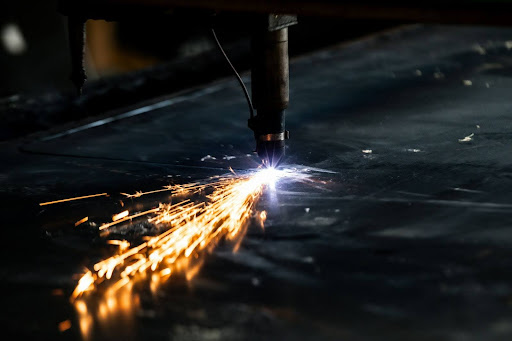
Across manufacturing sectors around the world, one trend is becoming increasingly clear: factories are rapidly integrating new forms of automation and high-precision technology to stay competitive. Whether you’re producing automotive components, aerospace assemblies, consumer goods, or metal fabrication products, efficiency and accuracy are more important than ever. This is why so many production lines are adopting an industrial laser welder as part of their workflow.
Laser welding, especially with today’s advanced industrial laser welder systems offers cleaner seams, faster speeds, and more consistent quality than many traditional welding approaches. With industries under pressure to reduce rework, lower costs, and increase throughput, the shift toward laser-based systems has become more than just a trend; it’s quickly turning into an operational standard. In this article, you’ll discover the key reasons factories are making the switch and what it means for the future of manufacturing.
Why Manufacturers Are Turning to Industrial Laser Welding
Factories today face a combination of challenges that push them toward more advanced welding solutions:
- Tight deadlines and demand for faster production cycles
- Shortages of skilled welders, making manual work harder to scale
- Need for high-precision welding in industries with strict quality requirements
- Increased pressure to reduce waste, scrap, and material deformation
Modern laser welding systems help address these challenges by combining accuracy, speed, and reduced heat distortion.
Superior Precision That Increases Product Quality
One of the biggest reasons factories are shifting to industrial laser welding is the significant jump in precision it offers. Laser beams can be focused to extremely small diameters, producing controlled, consistent welds with minimal distortion.
Key Precision Advantages
- Narrow, clean weld beads
- Low heat-affected zone
- Reduced risk of warping thin metals
- Better results on complex geometries
For industries such as aerospace, automotive EV components, medical devices, and electronics, precision isn’t optional, it’s a requirement. Industrial laser welders make it possible to hit tight tolerances repeatedly, even across large batches.
Faster Welding Speeds Increase Throughput
Speed is one of the most compelling benefits of industrial laser welding. Compared to traditional methods like MIG, TIG, or arc welding, laser welds can be completed significantly faster without compromising quality.
Why laser welding is faster:
- Instantaneous heating and melting
- High power density
- Single-pass welding, even on thick materials
- Reduced time spent on post-processing or cleaning
When cycle times drop, factories can produce more units per shift, meet demanding schedules, and reduce bottlenecks.
Less Heat Distortion and Cleaner Results
Heat distortion is a major cause of rework and scrap in traditional welding. Because lasers apply heat in a very concentrated beam, they minimize thermal deformation.
Benefits of low heat input include:
- Improved structural integrity
- Better cosmetic appearance
- Less grinding or finishing work
- Cleaner internal welds for sealed components
This is especially important when working with aluminum, stainless steel, thin sheets, and sensitive assemblies.
Greater Automation Compatibility
Industrial laser welders integrate seamlessly with automation far more easily than many manual welding processes. They can be paired with:
- Robotic welding arms
- Gantry-style automation systems
- Cobot systems for collaborative tasks
- CNC-controlled positioning systems
Automation enables predictable weld paths, reduced labor requirements, and improved safety.
Why automation matters more than ever:
- c make manual welding harder to staff
- Robots reduce the risk of operator injury
- Automated welding ensures consistent quality across shifts
The combination of robotics and laser welding is becoming a go-to solution for factories aiming to modernize.
Lower Long-Term Operating Costs
Although an industrial laser welder may have a higher upfront cost, the long-term savings often outweigh the investment.
Cost-saving factors include:
- Less rework and reduced scrap
- Lower consumable usage
- Fewer operator hours required
- Faster production cycles
Comparison: Traditional Welding vs. Laser Welding Costs
| Factor | Traditional Welding | Industrial Laser Welding |
| Consumables | High | Low |
| Rework | Moderate to High | Low |
| Training Time | High | Moderate |
| Cycle Speed | Slow to Medium | Fast |
| Automation Integration | Moderate | Excellent |
For many factories, switching to laser welding results in ROI within 12–24 months, depending on application and production volume.
Increased Flexibility Across Materials and Applications
Industrial laser welders work with a wide range of metals and thicknesses, making them ideal for diverse production lines.
Common materials they can weld:
- Stainless steel
- Carbon steel
- Aluminum
- Copper
- Titanium alloys
Laser systems also excel at welding:
- Thin sheet metal
- Automotive battery trays
- Aerospace brackets
- Enclosures and housings
- Food-grade stainless parts
- Precision components
This versatility is one reason so many factories see laser welding as a long-term investment, not just a task-specific tool.
A Cleaner, Safer, and More Modern Work Environment
Laser welding produces:
- Fewer fumes
- Minimal spatter
- Less noise
- Reduced risk of fire or explosion
These improvements create safer working conditions and reduce cleanup. As more factories adopt environmentally conscious practices, laser welding also supports sustainability goals by reducing waste and energy use.
As factories upgrade their capabilities, many evaluate equipment that offers both performance and reliability. Brands like Denaliweld provide welding tools and systems designed for modern manufacturing challenges, supporting both precision and efficiency.
Conclusion
The shift toward industrial laser welding is not just a passing trend, it’s a strategic move that helps factories stay competitive in a rapidly evolving manufacturing landscape. With its unmatched precision, high speed, low heat distortion, and excellent compatibility with automation, an industrial laser welder offers clear advantages for production environments of all sizes.
By reducing rework, enhancing weld consistency, and supporting high-volume output, laser welding has become one of the most reliable and future-ready technologies available today. Whether you’re modernizing your workflow or planning long-term growth, investing in laser welding can help your factory improve efficiency, quality, and operational resilience.