

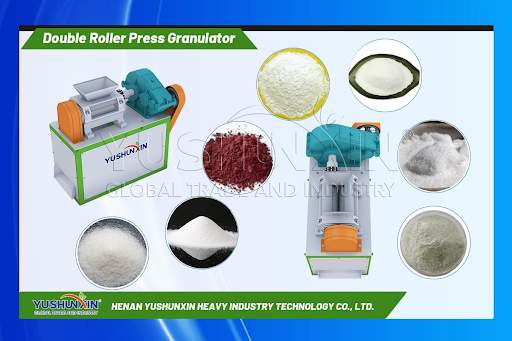
Fertilizer production is a cornerstone of modern agriculture, enabling farmers to achieve high crop yields and sustainable soil management. Among the most widely used fertilizers are NPK (Nitrogen, Phosphorus, and Potassium) compounds, which provide balanced nutrients essential for plant growth. Industrial manufacturers can now leverage advanced machinery, such as an NPK granulation plant and NPK dry granulation equipment, to produce high-quality fertilizers efficiently and consistently.
This article explores the features, benefits, and applications of these machines, highlighting their importance in modern fertilizer production.
NPK Granulation Plant: Continuous Compound Fertilizer Production
What Is an NPK Granulation Plant?
An NPK granulation plant is a complete fertilizer manufacturing system designed for producing compound fertilizers in granule form. It integrates several stages, including raw material preparation, granulation, drying, cooling, screening, and packaging, ensuring a streamlined production process suitable for large-scale operations.
Process of NPK Granulation
- Raw Material Preparation
Fertilizer-grade urea, ammonium phosphate, potassium chloride, and other nutrients are crushed, screened, and blended to achieve a uniform mixture. - Granulation
The blended powder is processed in the NPK granulation plant to form uniform granules, either through wet or dry granulation methods, depending on the plant design. - Drying and Cooling
Granules are dried to reduce moisture content and cooled to stabilize their structure for storage and handling. - Screening and Packaging
Granules are screened to ensure consistent size, with off-size particles recycled. The final product is packaged for distribution to farms or retail markets.
Benefits of an NPK Granulation Plant
- High Production Capacity: Continuous operation allows production of tons of fertilizer per day.
- Uniform Nutrient Distribution: Each granule contains balanced NPK nutrients, improving crop growth efficiency.
- Customizable Formulations: Fertilizer ratios can be adjusted to meet specific soil and crop requirements.
- Reduced Labor Costs: Automation reduces manual handling and increases efficiency.
- Cost-Effective Operation: Energy-efficient design minimizes fuel and electricity consumption.
Investing in an npk dry granulation equipment ensures consistent product quality, high output, and profitability for fertilizer manufacturers.
NPK Dry Granulation Equipment: Efficient Solid Fertilizer Production
What Is NPK Dry Granulation Equipment?
NPK dry granulation equipment is specialized machinery used to produce compound fertilizers without the need for liquid binders. This method is ideal for materials that may react with water or for locations where drying equipment is limited. Dry granulation produces hard, dense granules suitable for long-term storage and transportation.
Dry Granulation Process
- Powder Blending
Raw fertilizer powders are precisely blended to achieve the desired NPK ratio. - Compression and Granulation
The blended powder is compressed and granulated using rollers or extruders to form solid granules. - Screening and Recycling
Granules are screened for size uniformity, with off-size material recycled into the production process. - Packaging
Finished granules are packaged for storage, retail, or export.
Advantages of NPK Dry Granulation Equipment
- No Water Required: Reduces drying time and energy costs.
- High Granule Strength: Dense granules resist breakage during transport and storage.
- Efficient Operation: Continuous or semi-continuous processing increases output.
- Customizable Fertilizer Ratios: Supports different crop and soil requirements.
- Eco-Friendly Production: Minimizes waste and emissions compared to traditional wet granulation.
NPK dry granulation equipment is ideal for manufacturers seeking cost-effective, scalable, and high-quality fertilizer production.
Advantages of Modern NPK Fertilizer Production
1. Increased Production Efficiency
Both NPK granulation plants and dry granulation equipment offer continuous operation, enabling large-scale fertilizer production with minimal downtime.
2. Consistent Product Quality
Controlled granulation processes ensure uniform granule size, density, and nutrient distribution, resulting in high-performance fertilizers.
3. Reduced Operational Costs
Automation, energy-efficient designs, and material recycling minimize labor, fuel, and raw material costs.
4. Flexibility and Versatility
These machines can process a variety of raw materials, including urea, ammonium phosphate, potassium chloride, and other additives, allowing manufacturers to produce diverse fertilizer formulations.
5. Market Competitiveness
High-quality, uniform granules meet both domestic and international standards, enhancing marketability and export potential.
Applications in Agriculture
- Balanced Fertilization: Provides crops with essential nutrients for optimal growth.
- Soil Fertility Management: Improves soil structure and nutrient content over time.
- Custom Fertilizer Solutions: Tailored to specific crops, soil types, and regional agricultural requirements.
- Large-Scale Farming: Suitable for industrial farms, cooperative farms, and commercial fertilizer production.
Investing in modern NPK fertilizer production equipment ensures efficient supply chains and maximizes crop yield potential.
Choosing the Right Fertilizer Equipment
When selecting an NPK granulation plant or NPK dry granulation equipment, consider:
- Production Capacity: Ensure the equipment meets current and projected demand.
- Raw Material Availability: Confirm steady supply of NPK ingredients.
- Automation Level: Higher automation improves consistency, reduces labor, and increases efficiency.
- Product Quality Control: Machines should allow precise control over granule size, nutrient ratio, and density.
- Supplier Support: Opt for suppliers providing installation guidance, training, maintenance, and spare parts.
Choosing the right equipment guarantees safe, efficient, and profitable fertilizer production.
Conclusion
The NPK granulation plant and NPK dry granulation equipment represent modern, efficient, and scalable solutions for compound fertilizer production. Continuous granulation plants produce large quantities of balanced NPK fertilizers for industrial-scale operations, while dry granulation equipment allows cost-effective and water-free production of high-quality granules.
By adopting these technologies, fertilizer manufacturers can enhance production efficiency, reduce operational costs, maintain consistent product quality, and meet growing agricultural demand. Investing in advanced NPK fertilizer production equipment ensures long-term profitability, sustainability, and a competitive advantage in the global fertilizer market.