Why AR VR Game Development Services Are Essential for Gamified Learning

Immersion makes learning memorable.
That is why augmented reality (AR) and virtual reality (VR) are being embraced as powerful educational tools. They go beyond static lessons by turning classrooms into playgrounds of exploration. A textbook might describe the solar system, but AR can place the planets on a desk while VR lets students walk among them. When these experiences are combined with game mechanics, progress, rewards, collaboration, they create learning environments that are both fun and effective.
The best ar vr game development companies transform this vision into practical solutions. They build systems that run smoothly on varied hardware, align with educational outcomes, and keep accessibility in mind. This article looks at what AR and VR mean in learning, how gamification benefits, what development services add, and where the future is headed.
What Are AR and VR in the Context of Learning?
Defining Augmented Reality and Virtual Reality
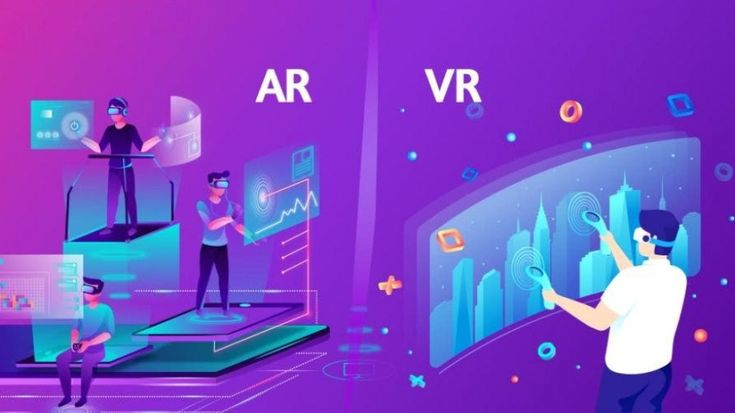
AR overlays digital content on real-world objects through mobile devices or smart glasses. VR immerses learners in computer-generated environments where they interact with digital elements as if they were tangible. Both change how students interact with knowledge.
Differences and Complementary Uses in Education
AR excels in scenarios where physical context matters: anatomy overlays in biology or technical instructions on real machines. VR works for immersion: historical events, hazardous training, or virtual labs. Used together, they complement each other, supporting both contextual guidance and deep simulation.
Current Trends in AR and VR for Learning
Trends include lightweight standalone headsets, mobile-first AR apps, and cloud platforms for shared VR spaces. Increasingly, AR and VR are being integrated into hybrid learning models where remote and in-person students can collaborate in real time.
How Gamified Learning Benefits from AR and VR Technologies
Enhancing Engagement and Motivation
Gamification introduces goals, progress markers, and rewards. When layered on top of immersive AR or VR environments, learners feel part of the journey rather than passive observers. Engagement rises because the process is active and enjoyable.
Enabling Experiential and Interactive Learning
Simulations allow learners to practice tasks safely. Medical students can rehearse surgeries in VR. Mechanics can use AR to visualize engines. Mistakes become learning moments without real-world consequences. This hands-on approach improves retention.
Supporting Diverse Learning Styles and Needs
Visual learners absorb through imagery, auditory learners through narration, and kinesthetic learners through interaction. AR and VR experiences can include all three. Adaptive design even supports accessibility, making learning inclusive.
Core benefits list
- Greater immersion and emotional connection with content
- Safe spaces to practice without real-world risk
- Higher motivation through rewards and progression systems
- Adaptability for different learning speeds and styles
- Immediate reinforcement through interactive feedback
Role of AR VR Game Development Services in Education
Designing Immersive Learning Environments
Developers create digital classrooms, labs, and simulations that feel intuitive and contextually accurate. Every environment must focus attention on the lesson, not the technology.
Integrating Educational Content with Game Mechanics
Game developers collaborate with educators to ensure that mechanics like levels, quests, or scoring systems reinforce curriculum goals. When gameplay and learning objectives align, outcomes improve.
Ensuring Accessibility and Usability
Professional teams build inclusivity into the foundation. Features like text-to-speech, scalable difficulty, lightweight assets, and support for multiple devices ensure no learner is left out.
Key Features of AR and VR Games for Learning
Real-Time Feedback and Adaptive Challenges
AR and VR platforms provide instant correction. If a learner mislabels a part of a system or makes an error in a simulation, feedback appears immediately. Adaptive engines scale difficulty to prevent frustration or boredom.
Collaborative and Social Learning Opportunities
Shared VR spaces and AR collaboration apps enable teamwork. Learners problem-solve together, which builds communication skills while reinforcing subject matter.
Tracking Progress and Learning Outcomes
Analytics dashboards show progress, completion rates, and engagement. Teachers can track where students excel and where they struggle, allowing tailored interventions.
Feature checklist
- Intuitive tutorials to reduce onboarding friction
- Adaptive difficulty that adjusts in real time
- Group challenges to encourage collaboration
- Reward systems tied directly to curriculum
- Progress dashboards for both students and teachers
- Multi-device compatibility for broader reach
Technical Considerations in AR VR Game Development
Platform Selection and Hardware Requirements
Not all schools can afford advanced headsets. Development services design for accessibility by supporting mobile AR while also offering high-end VR for institutions with the resources. This flexibility ensures scalability.
Performance Optimization and User Comfort
Frame rate, latency, and ergonomics decide whether an experience feels enjoyable or uncomfortable. Developers optimize performance, maintain steady frame rates, and design comfortable sessions to prevent motion sickness.
Security and Privacy in Educational Games
Education requires strict privacy protection. Developers implement secure authentication, encryption, and compliance with regulations like GDPR or COPPA. Protecting learners’ personal data is non-negotiable.
Challenges and Solutions in Developing AR VR Games for Education
Balancing Engagement with Educational Value
Too much focus on fun can dilute learning. Developers solve this by aligning every mechanic with an educational objective. Entertainment supports learning rather than distracting from it.
Managing Development Costs and Timelines
AR VR projects can be resource-intensive. Modular architecture, asset reuse, and phased rollouts reduce costs and let institutions adopt solutions incrementally.
Addressing User Adoption and Training Needs
Teachers and students may need training. User-friendly interfaces, onboarding tutorials, and support documentation smooth the adoption curve.
Future Trends in AR VR Gamified Learning
AI Integration for Personalized Learning Paths
AI-driven systems will create personalized journeys that adapt to learners’ progress. They will recommend challenges, adjust pace, and offer targeted practice.
Mixed Reality and Haptic Feedback Advances
Blending AR and VR with tactile feedback makes learning more realistic. Learners could feel resistance while practicing technical tasks or interact with mixed environments combining physical and digital elements.
Expansion of Remote and Hybrid Learning Capabilities
Remote students can meet in VR classrooms or join AR sessions from home. This expands access and ensures consistent learning quality across geographies.
Summarizing Why AR VR Game Development Services Are Vital
Gamified learning thrives when experiences are immersive, engaging, and aligned with curriculum goals. AR and VR amplify these benefits by creating safe, interactive, and personalized learning spaces. Development services bring the technical expertise to make these systems accessible, optimized, and secure.
Institutions that partner with AR VR developers gain durable, future-proof platforms. They get solutions that motivate learners, support teachers, and evolve as technology advances. In short, AR VR game development services are not just helpful—they are essential to making gamified learning a lasting success.With industry expertise of 15+ years across 5 continents and 10+ industries, Devsinc’s team of highly vetted IT professionals understand this which is why it makes them a top choice for businesses leading the digital front.